
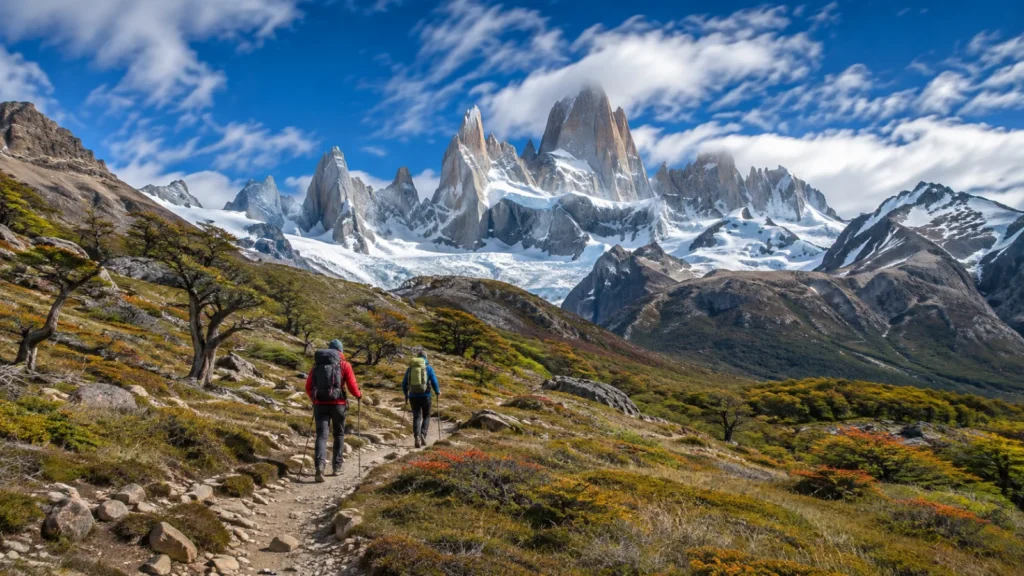
A 10 day Patagonia itinerary can connect El Calafate, El Chaltén, Puerto Natales, and Torres del Paine, but it is a compact two-country trip. The workable version protects full days for the landscapes and accepts that one day will largely disappear into the Argentina–Chile border crossing.
Use nine nights, arrive through El Calafate, and depart through Punta Arenas or another logical Chilean gateway. Do not add Ushuaia or Buenos Aires as another base. Patagonia looks continuous on a map, but its roads, border formalities, wind, and changing trail conditions make usable time more important than mileage.
Quick Answer
- Route: El Calafate, El Chaltén, Puerto Natales, Torres del Paine.
- Nights: 2 in El Calafate, 3 in El Chaltén, 2 in Puerto Natales, 2 in or near Torres del Paine.
- Best flight pattern: fly into El Calafate and out of Punta Arenas when schedules and fares work.
- Big transfer: El Calafate to Puerto Natales takes about six hours before possible border delays.
- Weather strategy: keep two El Chaltén days and two Torres del Paine days rather than betting everything on one forecast.
- Skip: Ushuaia and an overnight stay in Buenos Aires unless you add days.
Is 10 days enough for Patagonia?
Ten days is enough for this southern Patagonia corridor, not for Patagonia as a whole. It works because El Calafate and El Chaltén share the same Argentine gateway, while Puerto Natales is the practical base for entering Torres del Paine. Even so, the route contains three hotel changes and an international land crossing.
If long hikes are the main purpose of the trip, add at least two more days. If the priority is seeing the glacier, taking moderate walks, and getting a strong introduction to both national parks, this plan is ambitious but realistic.
The 10 day Patagonia itinerary at a glance
| Day | Base | Main plan | Major logistics |
|---|---|---|---|
| 1 | El Calafate | Arrive and settle in | Keep plans light around flight delays |
| 2 | El Calafate | Perito Moreno Glacier | Reserve transport and check park hours |
| 3 | El Chaltén | Morning transfer and short walk | Bus is roughly 2 hours 40 minutes |
| 4 | El Chaltén | Primary hiking day | Choose trail by current conditions |
| 5 | El Chaltén | Second hike or weather buffer | Do not pre-assign the hardest hike |
| 6 | Puerto Natales | Return to El Calafate and cross to Chile | Only use this plan if date-specific buses align |
| 7 | Puerto Natales | Recovery and park preparation | Collect food, fuel, tickets, and permits |
| 8 | Torres del Paine area | First park day | Move into or near the park |
| 9 | Torres del Paine area | Second park day | Adjust to weather and trail status |
| 10 | Departure | Return toward Puerto Natales or Punta Arenas | Do not pair with a tight long-haul flight |
Day 6 is the route’s pressure point. Same-day El Chaltén to Puerto Natales is possible only when the El Chaltén–El Calafate and El Calafate–Puerto Natales services connect on the exact travel date. If they do not, return to El Calafate late on Day 5 and use Day 6 entirely for the border bus.
Days 1 and 2: El Calafate and Perito Moreno
El Calafate is the air and road gateway, not a substitute for the glacier. Make Day 1 flexible because late arrivals can miss onward buses and rental-car desks. Use the evening to confirm the next day’s transport and check the official Los Glaciares notices.
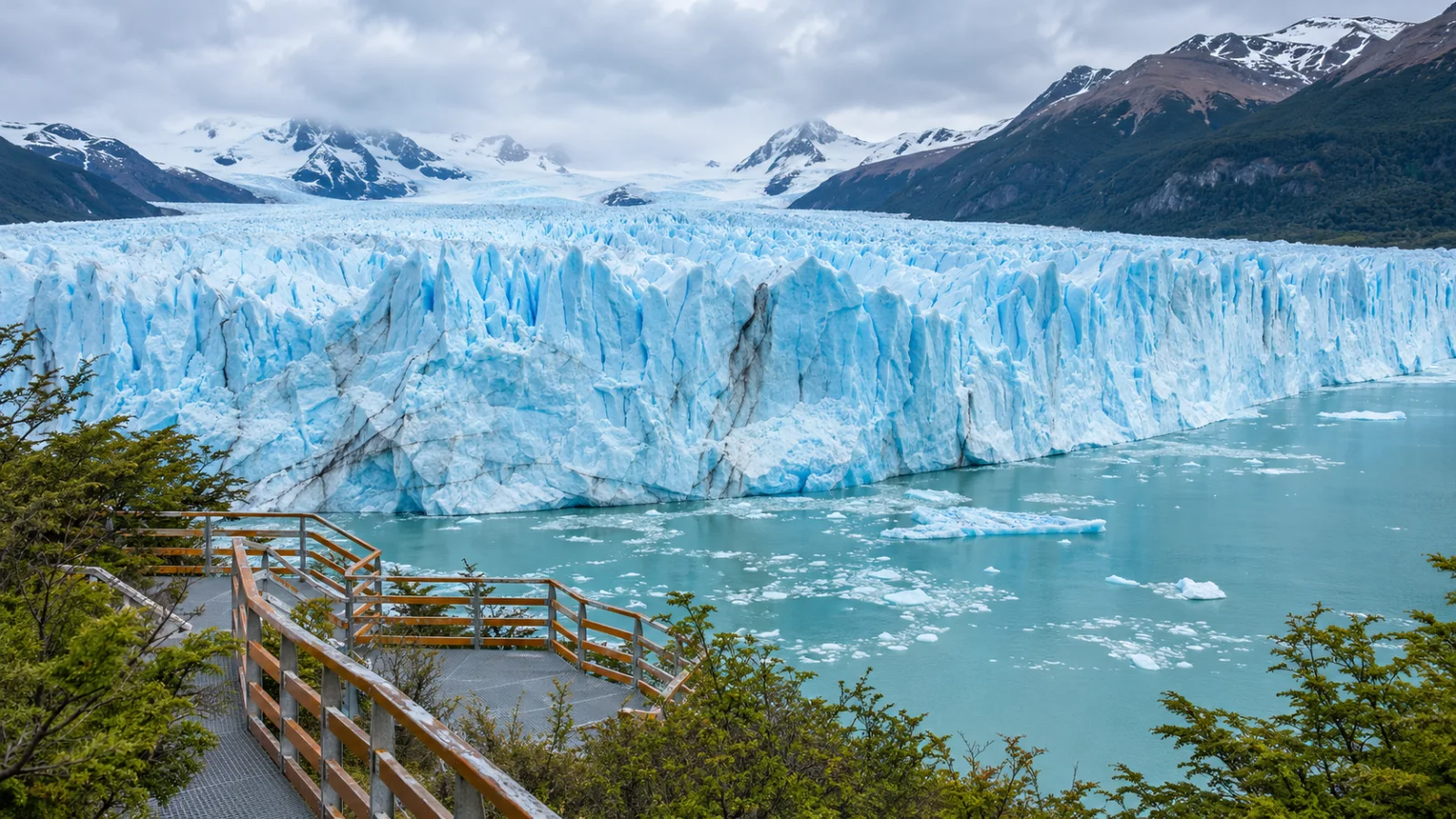
Give Perito Moreno most of Day 2. The glacier sits about 80 kilometers from El Calafate by road. The official Los Glaciares National Park access page lists summer access to the Mitre Corridor from 8 a.m. to 6 p.m., with visitors remaining until 8 p.m., for September 1 through April 30. Confirm the current rule before leaving because weather, road work, and safety measures can change access.
The walkways provide several elevations and angles, so there is no need to race between viewpoints. A boat trip is optional and should fit around transport, not replace time on the walkways.
Days 3 to 5: El Chaltén
Current operator listings put the El Calafate–El Chaltén bus at roughly 2 hours 40 minutes. Treat that as an example, not a guaranteed timetable. Book the exact date and confirm whether the service starts at the bus terminal, stops at the airport, or has seasonal changes.
After a morning arrival on Day 3, choose a short local walk rather than forcing a full-day trek. Days 4 and 5 are interchangeable. Put the clearest, least windy forecast on the priority hike, then use the other day for a second trail, a shorter valley walk, or recovery.
El Chaltén is the North Zone of Los Glaciares National Park, which is managed separately from the Perito Moreno sector. Check the ranger information center and current trail notices. A sunny forecast in El Calafate does not guarantee the same conditions around Fitz Roy.
Day 6: crossing from Argentina to Chile
The direct El Calafate–Puerto Natales route is listed at about six hours by Bus-Sur. That estimate includes a normal border process, not every possible delay. Services and departure times vary by date, so do not build the itinerary around a schedule shown by a search engine or reseller.
Carry the documents required for both countries, keep your entry records accessible, and review Chile’s current agricultural entry controls before packing food. Fresh fruit, meat, seeds, and other plant or animal products can create problems at inspection. Declare anything uncertain.
If the same-day connection from El Chaltén is not sold as a dependable sequence, leave El Chaltén on Day 5. Losing an evening is better than losing the international bus and the first Chilean night.
Day 7: Puerto Natales as a gateway
Puerto Natales is where the route resets. Use the day to rest after the border, buy supplies, confirm park transport, and review the official Torres del Paine information. The town is the transport and service gateway, but it is still roughly 80 to 130 kilometers from the park’s different entrances.
Sleeping in Puerto Natales saves money and gives more restaurant choice. Sleeping in or near the park saves road time. With only two park days, the second option often protects more useful daylight if the budget allows.
Days 8 and 9: Torres del Paine
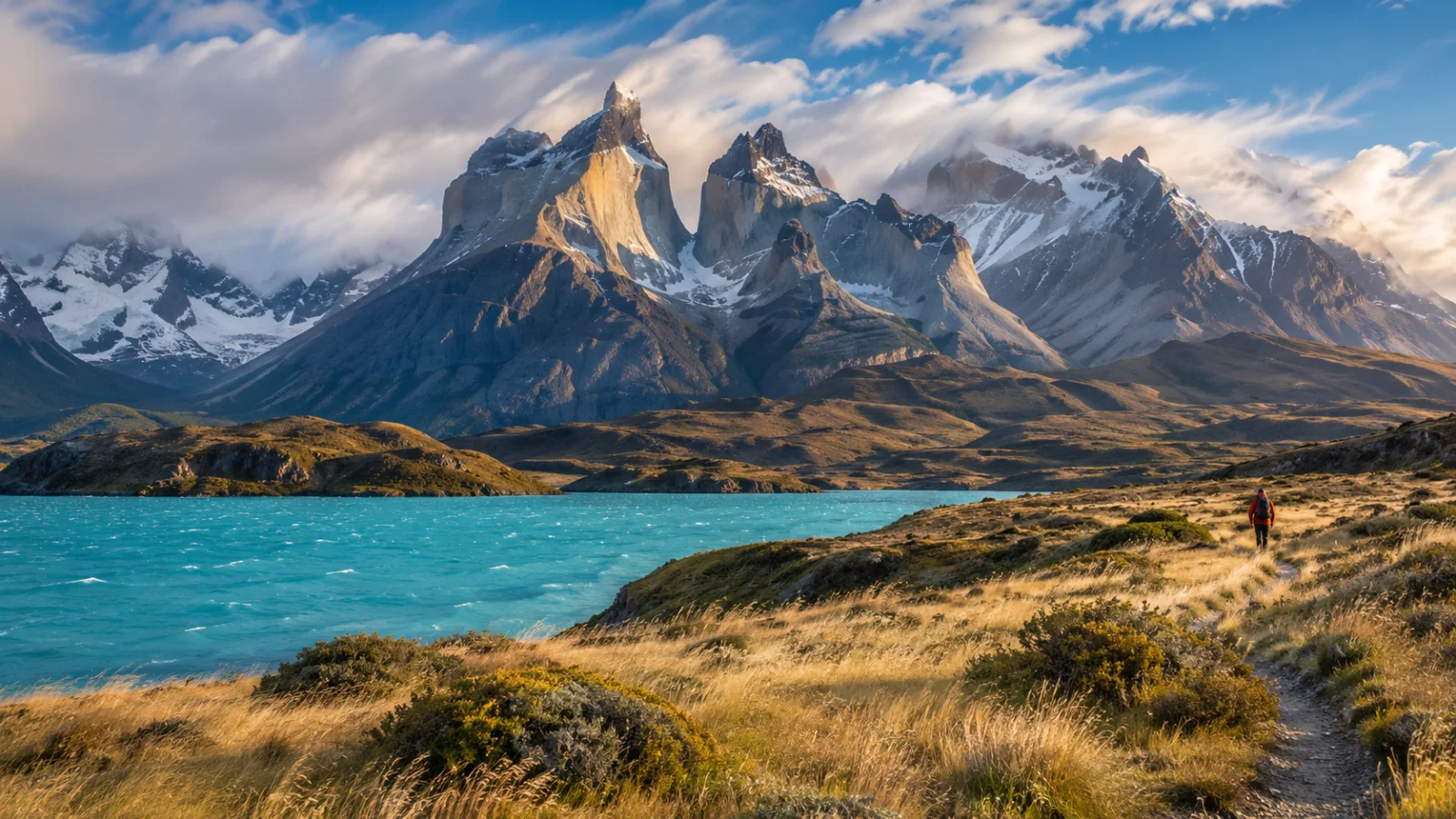
Use two days for two distinct priorities, such as a major hike on the better-weather day and a scenic road, lake, or shorter trail plan on the other. Do not promise both days to long hikes before seeing the wind and trail reports.
Buy the park ticket in advance. The official site currently instructs visitors to purchase at least 24 hours before entry. Anyone planning the W or O circuit must also hold the required lodging or camping reservations. Check the current 2026–2027 bulletin for seasonal trail start and closing times because a late arrival can invalidate an otherwise reasonable hiking plan.
Why we do not add Ushuaia
Ushuaia is not a side trip from this corridor. Adding it means another flight or a very long overland move, another hotel change, and fewer weather options in El Chaltén or Torres del Paine. In ten days, the opportunity cost is at least one of the trip’s essential outdoor days.
Buenos Aires is excluded for the same reason. It may be the international gateway used before or after Patagonia, but it is not a base in this itinerary. Travelers who want the capital plus Argentine Patagonia should use the separate 10-day Argentina itinerary.
Transport: bus vs rental car vs flight
Bus: best for avoiding one-way international rental fees. It works well between established gateways, but exact operating days control the route.
Rental car: adds flexibility around El Calafate, El Chaltén, Puerto Natales, and the park. Crossing the border requires written permission, insurance valid in both countries, and advance approval from the rental company. A cross-border one-way return may be unavailable or expensive.
Flight: useful for entering El Calafate and leaving through Punta Arenas or Santiago, not for hopping between the stops in this itinerary. Airport transfers and limited schedules still need to be counted.
Weather and buffer days
Patagonian weather is not an attraction timetable. Wind can affect hiking, roads, and flights; cloud can hide the peaks; rain or snow can change trail conditions. Two days in each hiking area provide choices, not guarantees.
Pack for rapid changes and decide the exact hike locally. The buffer belongs inside the destination, not at the end of a chain of nonrefundable transfers. The broader trip planning checklist can help align tickets, lodging, documents, and backup plans.
Where an open-jaw flight helps
An open-jaw trip avoids retracing the border crossing. Search one itinerary into El Calafate and out of Punta Arenas, then compare it with a round trip through Buenos Aires or Santiago. Punta Arenas is about three hours by road from Puerto Natales under normal conditions, so a morning long-haul departure may require a final night there.
Compare the total trip, not just airfare. Include the return bus, extra hotel, baggage, and missed-day risk. The article on when to book international flights explains why the booking window should follow the route decision.
Common planning mistakes
- Calling the route relaxed when it includes an international land crossing and three hotel changes.
- Assuming El Chaltén connects to Puerto Natales every day in one seamless ticket.
- Using one hiking day per park with no weather alternative.
- Booking a rental car before confirming cross-border permission.
- Buying Torres del Paine lodging without checking the current trail bulletin.
- Putting Ushuaia on the route because both places are labeled Patagonia.
- Scheduling an international flight immediately after the drive from Puerto Natales.
FAQ
Can I do this itinerary entirely by bus?
Yes, if the exact seasonal schedules align. Verify El Chaltén–El Calafate, El Calafate–Puerto Natales, and park transport before booking nonrefundable hotels.
Should I stay in Puerto Natales or Torres del Paine?
Puerto Natales is cheaper and easier for services. Staying in or near the park costs more but protects time on a short itinerary.
Do I need two days in El Chaltén?
Two full days are the minimum sensible allocation for hikers because weather may make the first-choice trail unattractive or unsafe on one day.
Can I add Buenos Aires?
Only as a flight connection unless more days are available. Adding a city stay removes time from the Patagonia-only route.
Is the border crossing predictable?
No. The bus has a published duration, but queues, inspections, weather, and passenger processing can extend it.
Conclusion
The strongest 10 day Patagonia itinerary does not collect destinations. It protects Perito Moreno, two El Chaltén days, a realistic border crossing, and two chances to experience Torres del Paine. Fly into El Calafate, leave through Chile when practical, and reject additions that steal the weather buffer. For the broader logic behind sequencing multiple bases, see multi-city trip planning.
Last updated: November 21, 2026. Park access, trail conditions, bus schedules, border rules, and flight timetables can change. Verify official information for the exact travel dates before booking.