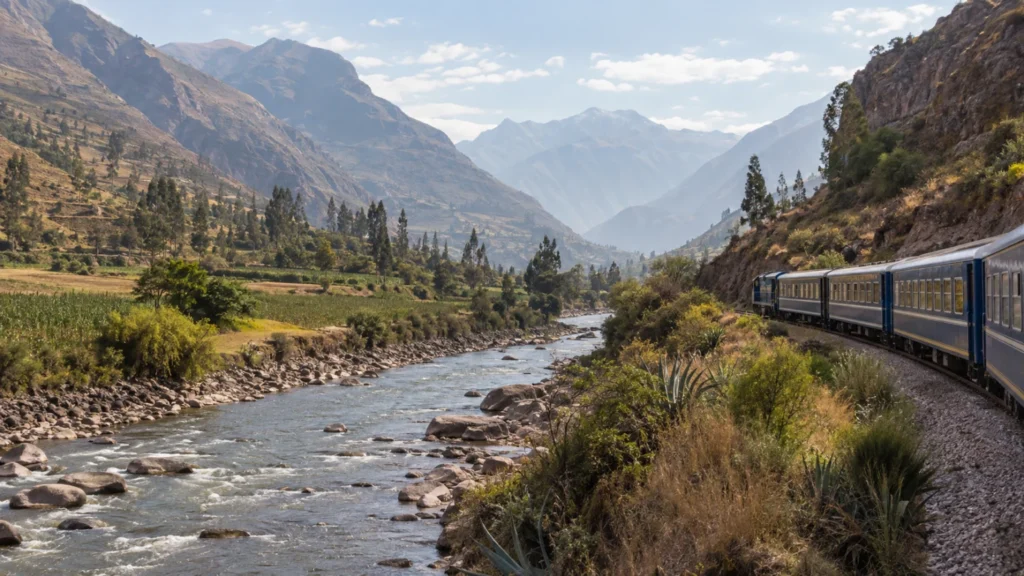
A first trip to Peru often looks simple on a map: Lima, Cusco, the Sacred Valley, and Machu Picchu. The order matters. Flying from sea level to Cusco and immediately filling the schedule ignores altitude, while booking trains before the correct Machu Picchu entry can lock the trip around the wrong constraint.
This 10-day Peru itinerary uses nine nights and moves from Lima to the lower Sacred Valley before placing the main Cusco stay near the end.
Quick Answer
- Night split: Lima 2, Sacred Valley 3, Machu Picchu Pueblo 1, Cusco 2, Lima 1.
- Best order: Lima, Sacred Valley, Machu Picchu, Cusco, Lima.
- First constrained booking: the correct Machu Picchu date, circuit, route, and entry time.
- Biggest trade-off: the final Lima night uses time but protects the international departure.
10-day Peru itinerary at a glance
| Day | Plan | Sleep |
|---|---|---|
| 1 | Arrive Lima | Lima |
| 2 | Lima neighborhoods, history, and food | Lima |
| 3 | Fly to Cusco; transfer down to Sacred Valley | Sacred Valley |
| 4 | Easy Sacred Valley day | Sacred Valley |
| 5 | Ollantaytambo and flexible valley time | Sacred Valley |
| 6 | Train toward Machu Picchu | Machu Picchu Pueblo |
| 7 | Machu Picchu; continue to Cusco | Cusco |
| 8 | Cusco at a measured pace | Cusco |
| 9 | Fly to Lima; departure buffer | Lima |
| 10 | Depart Lima | — |
Days 1–2: Lima
Let Day 1 absorb the international arrival. On Day 2, choose a manageable mix of the historic center and one coastal neighborhood rather than crossing the city repeatedly. Lima is not only a connection; two nights create a calmer start and a cushion before the altitude change.
Days 3–5: Start in the Sacred Valley
After landing at Cusco, continue to a Sacred Valley base instead of treating the airport city as the first overnight. The valley is lower than Cusco, although it is still high enough for altitude symptoms to matter. Keep the first afternoon easy, hydrate normally, avoid a hard workout, and take symptoms seriously.
The CDC guidance on high-altitude travel notes that travelers sleeping above roughly 2,500 meters can be at risk of altitude illness and that itinerary design matters. Personal medical advice belongs with a clinician, especially for travelers with relevant conditions or prior altitude problems.
Use Days 4 and 5 for a measured valley plan. Ollantaytambo works well as a base or full visit because it also supports the rail sequence. Do not turn both days into dawn-to-dark transfers.
Days 6–7: Train and Machu Picchu
Travel by train on Day 6 and sleep in Machu Picchu Pueblo. This avoids attaching a major timed entry to a same-day journey from Cusco. Train departure stations and luggage policies vary, so verify the exact operator, station, and bag rules.
Official access is organized by circuit, route, date, and entry time. Review the current circuits and routes, then use the official ticket path linked by Peru’s cultural authorities. Buy the entry that matches the experience you want before making the train and hotel nonrefundable.
After the visit on Day 7, continue to Cusco only if the confirmed train and road transfer leave a comfortable margin. The day already includes a timed archaeological visit and a multi-stage journey.
Days 8–10: Cusco, Lima, and departure
Keep Day 8 in Cusco. Choose the historic center and nearby sites at a pace that matches how you feel. Day 9 returns to Lima and protects the international departure from a separate domestic-flight disruption. Day 10 is the departure day.
Book in the right order
- Confirm international flights and the nine-night frame.
- Select the Machu Picchu circuit, route, date, and entry time.
- Fit the train around that entry with realistic transfer margin.
- Book Sacred Valley, Machu Picchu Pueblo, Cusco, and Lima lodging.
- Book domestic flights after checking the complete chain.
The trip planning checklist can keep these dependencies visible. Use Google Flights to compare domestic timing, and compare one-way, round-trip, and open-jaw structures for the international trip. Verify baggage and ticket rules with the airline.
What not to add
Skip Rainbow Mountain, Lake Titicaca, Arequipa, Colca Canyon, and the Amazon in this version. They add altitude, long road travel, or another flight. If one is central to the trip, rebuild the route around it instead of attaching it to the spare hours.
Related Reading
FAQ
Should I stay in Cusco first?
Not necessarily. Going directly to a lower Sacred Valley base can make the first nights more gradual, but it does not eliminate altitude risk.
Do I need a night in Machu Picchu Pueblo?
No, but it makes the timed visit less dependent on a long same-day approach from Cusco.
Conclusion
This 10-day Peru itinerary works because it is built around altitude, limited-entry tickets, and transfer chains instead of treating them as afterthoughts. Start lower in the Sacred Valley, book Machu Picchu before the train, and keep the final Lima night when the international departure is not protected on the same ticket.
Last updated: September 2026. Entry routes, ticket platforms, train operations, flight schedules, health guidance, and access rules can change. Verify official information for your dates and seek personal medical advice when appropriate.