
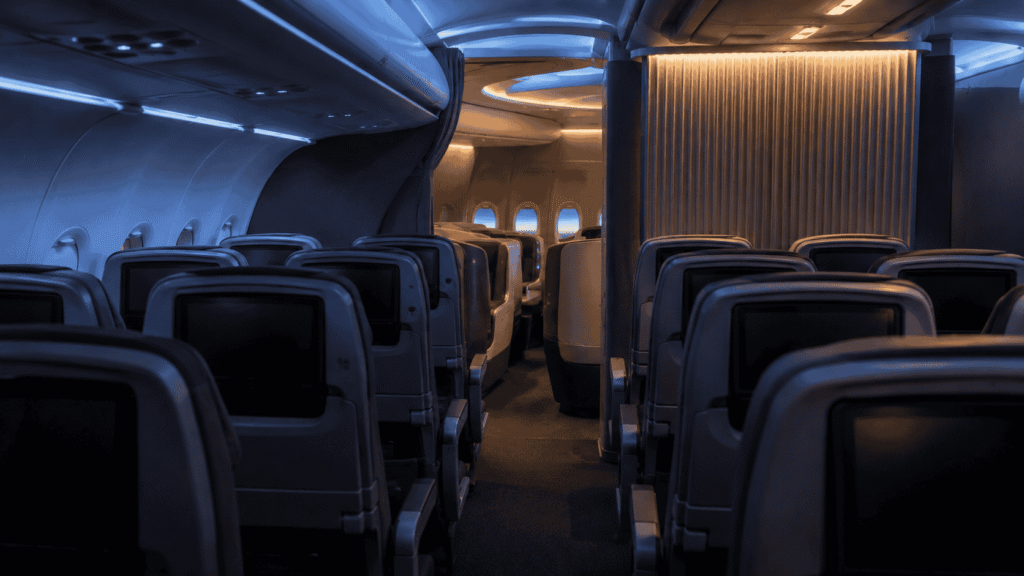
Two passengers can sit in the same economy cabin with very different upgrade chances. One has elite status. One sees a paid offer in the airline app. Another can bid. Someone else has miles but booked a fare that is not eligible.
That is why understanding how airline upgrades work matters before you buy the ticket you hope to improve later. Upgrades are not one system. They are several separate paths, each controlled by fare rules, inventory, airline policy, timing, and price.
Quick Answer
- Best for: travelers deciding whether to buy economy or premium economy and try to move into a better cabin later.
- Works best when: your fare is eligible, upgrade inventory exists, and the upgrade cost is lower than buying business class outright.
- Does not work well when: you need certainty, bought a restricted fare, or would be unhappy flying the original cabin.
- Main risk: booking the wrong fare because you assume miles, cash, a bid, or a gate request will solve it later.
- Next step: check the airline’s official upgrade rules before buying the base ticket, then compare miles, cash, bid, and outright business-class pricing.
The upgrade paths compared
| Upgrade type | How you pay | Availability | Predictability | Best use case |
|---|---|---|---|---|
| Complimentary | Status, certificates, or airline benefit rules | Depends on route, cabin, fare, priority, and available upgrade inventory | Low to medium | Elite travelers who are comfortable flying the original cabin if the upgrade does not clear |
| Miles | Miles, sometimes with a cash copay | Requires an eligible fare and upgrade inventory | Medium if confirmable, lower if waitlisted | Travelers with miles who can verify the rules before buying |
| Cash | Paid offer after booking or during check-in | Dynamic and airline-controlled | Medium if the offer confirms immediately | Travelers who find a total price meaningfully below buying the premium cabin outright |
| Bid | Cash, and on some airlines points, if the bid is accepted | Only on eligible flights and bookings | Low to medium | Flexible travelers who can tolerate uncertainty before departure |
| Operational | No planned payment by the traveler | Airline-controlled and driven by operational circumstances | Very low | Not a strategy; accept it if it happens |
Complimentary upgrades
Complimentary upgrades usually depend on elite status, airline rules, fare type, route, priority, and available upgrade inventory. Delta publishes its Medallion upgrade rules, including eligibility, priority, and availability. American Airlines also publishes status-upgrade rules covering eligible fares, priority, inventory, and systemwide upgrades.
The useful lesson is not that every program works like Delta or American. It is that complimentary upgrades are rule-based. Asking politely at the airport is not a reliable strategy for getting business class. Availability and airline priority rules matter far more than simply requesting a better seat.
Miles upgrades
A miles upgrade uses airline miles to move an eligible ticket into a higher cabin. Depending on the airline, route, fare class, and status, the upgrade may require miles only or miles plus a cash copay. Some upgrades confirm immediately when inventory exists; others waitlist and may never clear.
This is where many travelers make the expensive mistake: they buy a cheap fare first and check upgrade eligibility later. The safer order is to read the airline’s official upgrade rules before buying, verify whether the fare qualifies, and understand what happens if the upgrade does not clear.
If the plan depends on transferable points, use Transfer Points to Airlines before moving anything. Transfers can be irreversible, and upgrade availability can disappear.
Paid cash upgrades
A paid upgrade is an airline offer to move to a higher cabin after the original ticket has been purchased. Depending on the carrier, an offer may appear in Manage Booking, the airline app, during online check-in, at a kiosk, or at the airport.
Air Canada, for example, offers Last Minute Upgrade Purchases on eligible flights during check-in and states that prices vary by flight and market. Availability is not guaranteed, and the price is shown only when the traveler becomes eligible to purchase the upgrade.
Cash upgrades can be attractive because they can provide certainty once the offer is accepted. The trade-off is dynamic pricing. The offer you see today may change, disappear, or become less attractive than simply buying the business-class fare outright.
Also check what remains tied to the original fare. Air Canada, for example, says passengers receiving its Last Minute Upgrade continue to earn Aeroplan points and status credit according to the original fare purchased. Other rules can vary by airline, so verify baggage, mileage earning, cancellation, rebooking, lounge access, and other benefits before paying.
Bid upgrades
A bid upgrade lets an eligible traveler submit an offer for a higher cabin. The airline controls which flights and bookings qualify, the bidding window, any minimum bid, and how winning offers are selected.
Air Canada allows eligible travelers to bid using cash or Aeroplan points on selected flights. Virgin Atlantic’s Your Bid terms explain that eligible bids are assessed before departure and that unsuccessful bids are not charged.
Bids are useful when you would enjoy the upgrade but do not require it. They are poor tools for certainty. Even a strong bid can fail because premium inventory changes or because the airline’s acceptance process favors a different combination of bid amount, availability, booking characteristics, or timing.
Watch the math when more than one passenger or flight segment is involved. Virgin Atlantic, for example, states that bids apply per passenger and that multi-sector journeys require separate bids for the relevant sectors.
Operational upgrades
An operational upgrade happens when an airline changes a passenger’s cabin for operational reasons rather than through a normal paid, miles, bid, or status-upgrade path. These decisions are controlled by the airline and should not be treated as something a traveler can reliably request or engineer.
Oversales are one example of an operational situation airlines may need to manage. The U.S. Department of Transportation explains passenger protections related to oversold flights and denied boarding, but those rules do not promise that a traveler will receive a premium-cabin upgrade.
If an operational upgrade happens, treat it as an unexpected outcome rather than a booking strategy. Buy a cabin you are willing to fly.
When an upgrade makes sense
- The original cabin is acceptable if the upgrade fails.
- The upgrade cost plus the original fare is meaningfully below buying business class outright.
- The airline confirms the upgraded cabin immediately, or you are comfortable with the waitlist.
- The fare remains eligible under the airline’s current rules.
- The upgraded seat is actually the product you want. Use Best Business Class Seats before paying for a long-haul upgrade.
When to skip the upgrade plan
- You need business class with certainty for sleep, work, health, or schedule reasons.
- The upgrade total is close to the business-class fare. In that case, compare the paid fare directly using Business Class Deals before committing to a lower cabin plus upgrade.
- The base fare is basic economy or another restricted fare with poor upgrade eligibility. See Basic Economy vs Economy before assuming the cheaper fare is the smarter base ticket.
- The upgrade would not include the benefits you care about, such as lounge access, baggage, earning, or flexibility.
- You would need to transfer points speculatively before upgrade space is confirmed.
Step by step: Check an upgrade before buying
- Price the premium cabin first. You need the business-class fare as the comparison point.
- Check the base fare rules. Confirm whether the economy or premium economy fare is upgrade-eligible.
- Read the airline’s official upgrade page. Rules vary by carrier, route, cabin, status, and ticket type.
- Look for confirmable space. A waitlist is different from an upgrade you can lock in now.
- Add the full cost. Include the original fare, miles, copay, bid amount, taxes, and any lost flexibility.
- Check what changes after the upgrade. Seat, bags, lounge access, earning, cancellation, and rebooking rules may not all move together.
- Decide whether uncertainty is acceptable. If not, buy the cabin you need instead of hoping for the upgrade.
Example with assumptions
Example with assumptions: These numbers are illustrative, not current prices or upgrade quotes.
- Economy ticket: $900
- Cash upgrade offer: $700
- Business-class fare bought outright: $2,100
- Total after upgrade: $1,600
In this scenario, the cash upgrade can make sense if it confirms immediately, the seat is the business-class product the traveler wants, and the original fare rules are acceptable. The traveler pays $500 less than the business-class fare.
But the decision can change. If mileage earning remains tied to the original fare, the upgraded ticket does not include the same flexibility, or the offer covers only one segment of a longer trip, the $500 difference may not be enough. If business class is necessary, buying it outright may still be cleaner.
Common mistakes
- Buying basic economy and assuming an upgrade will be available later.
- Using miles without checking eligible fare classes and possible copays.
- Submitting a bid without multiplying the price by passengers and segments.
- Assuming lounge access, baggage, mileage earning, and refund rules all improve after an upgrade.
- Waiting for a paid upgrade offer when the premium-cabin fare is already acceptable.
- Treating operational upgrades as something a traveler can engineer.
Related reading
- Is Business Class Worth It? helps decide whether the cabin is worth pursuing at all.
- Business Class Deals explains how to compare cash sales, route competition, mistake fares, positioning flights, and upgrade paths.
- How to Book Business Class with Points covers the award-booking path when upgrade space is not the best route.
- Transfer Points to Airlines explains what to verify before moving transferable points.
- Best Business Class Seats helps verify whether the upgraded cabin is actually worth paying for.
FAQ
Can you upgrade from economy to business class?
Sometimes. It depends on the airline, fare type, route, cabin layout, upgrade inventory, and whether the airline allows that upgrade path.
Is it better to upgrade with miles or cash?
Cash is simpler when the offer is reasonable and confirms immediately. Miles can work when the fare is eligible, inventory exists, and the miles plus any copay compare well with the cash alternative.
How does airline upgrade bidding work?
You submit an offer for an eligible flight. If the airline accepts it, the upgrade is confirmed and the payment is charged according to that airline’s terms. If the bid fails, you normally keep the original cabin.
Can asking at the gate get you upgraded?
It is not a reliable strategy. Upgrades normally follow airline eligibility rules, inventory controls, paid offers, elite priority, bids, certificates, or operational decisions.
Do upgrades change the fare rules?
Not necessarily. The original ticket may still control cancellation, rebooking, mileage earning, and other terms. Check the airline’s official rules before paying or transferring miles.
Conclusion
Airline upgrades work best when you treat them as conditional options, not promises. The right path depends on eligibility, inventory, price, timing, and whether you can accept the original cabin if nothing clears.
- Check upgrade rules before buying the base fare.
- Compare the total upgrade cost against buying business class outright.
- Use miles, cash, or bids only when the rules and uncertainty fit the trip.
Last updated: September 2026. Fares, upgrade rules, loyalty policies, bid terms, aircraft assignments, and airline terms can change; verify current details before booking.