
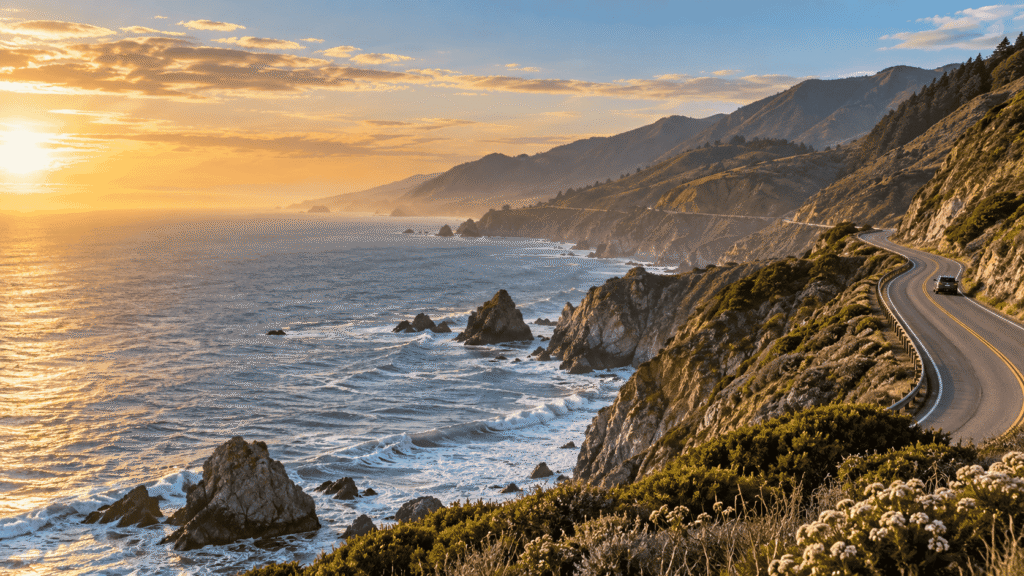
A 7-day California itinerary can work beautifully if you treat the coast as a real road trip, not a straight line on a map. San Francisco, Big Sur, and Los Angeles fit into one week, but the route depends on daylight, parking, rental-car logistics, and the current condition of Highway 1.
This route starts in San Francisco and ends in Los Angeles. Driving south keeps the Pacific on the ocean side for many coastal stretches, while flying into one city and home from the other avoids backtracking. The important caveat is Big Sur: road conditions can change quickly, so verify Highway 1 before locking the coastal portion of the trip.
Quick Answer
- Suggested route: San Francisco → Monterey/Carmel → Big Sur → Santa Barbara → Los Angeles.
- Suggested airports: fly into SFO and out of LAX, or reverse the trip if flights work better.
- Car strategy: stay car-free in San Francisco, then rent when leaving the city.
- Biggest uncertainty: Highway 1 can close because of wildfire, slides, construction, weather, or emergency work.
- If Highway 1 is open: use the coast as part of the trip rather than rushing through it.
- If Highway 1 is closed: use US 101 as the functional north-south route and visit accessible coastal sections separately.
How This 7-Day California Itinerary Works
The route works because it avoids trying to cover the entire state. California is too large for San Francisco, Napa, Yosemite, Big Sur, Los Angeles, San Diego, and every coastal town to fit comfortably into seven days.
This version makes one decision: follow the San Francisco-to-Los Angeles corridor and let the Central Coast be part of the experience. That means fewer destinations, fewer long detours, and more flexibility when road conditions change.
Check Highway 1 Before You Book the Coast
Highway 1 is one of the reasons travelers choose this route, but it should never be treated as guaranteed. During our September 2026 editorial review, Caltrans road information still showed a wildfire-related closure on part of the Central California route and one-way controlled traffic near Rocky Creek Bridge.
Those conditions can change before your trip. Use Caltrans QuickMap and current road information immediately before driving. Build the itinerary so a closure changes the route rather than ruining the vacation.
The Seven-Day Route
| Day | Base | Plan |
|---|---|---|
| 1 | San Francisco | Arrive, settle in, easy city exploration |
| 2 | San Francisco | Golden Gate, neighborhoods, waterfront, or Alcatraz if booked |
| 3 | Monterey/Carmel | Pick up rental car and travel south |
| 4 | Monterey/Carmel or Big Sur | Explore accessible Big Sur coastal sections |
| 5 | Santa Barbara or Central Coast | Continue south by the coast if open or use the inland alternative |
| 6 | Los Angeles | Complete the drive and focus on one part of LA |
| 7 | Los Angeles | Second LA day or departure, depending on flight time |
Day 1: Arrive in San Francisco
Keep arrival day flexible. Check in, walk part of the waterfront or a nearby neighborhood, and avoid scheduling a major attraction around an unpredictable flight arrival.
Day 2: San Francisco
Use the full day for the parts of San Francisco that matter most to you. Golden Gate viewpoints, the waterfront, Chinatown, North Beach, neighborhoods, museums, or Alcatraz can all work, but avoid trying to cross the city repeatedly just to collect highlights.
Day 3: San Francisco to Monterey or Carmel
Pick up the rental car when you are ready to leave San Francisco rather than paying for parking during the city portion. Drive toward Monterey Bay and Carmel, then use the rest of the day for the waterfront, Carmel, or nearby coastal stops.
Day 4: Big Sur
This is the scenic day. If road conditions allow, explore accessible portions of the Big Sur coast without turning every viewpoint into a mandatory stop. The goal is not mileage. Leave enough daylight for the drive and enough flexibility for traffic, road work, and weather.
Day 5: Central Coast to Santa Barbara
If the coast is open through the required sections, continue south at a relaxed pace. If it is not, move inland to US 101 and treat any open coastal stretches as optional detours rather than trying to force a through-drive.
Day 6: Santa Barbara to Los Angeles
Finish the road-trip portion and enter Los Angeles with a realistic plan. Traffic can change the day, so choose one geographic area instead of building an itinerary that jumps between distant neighborhoods.
Day 7: Los Angeles or Departure
If you have a full day, focus on the experience you actually want: beaches, museums, studios, food neighborhoods, or classic first-time sights. If the flight leaves earlier, treat this as a departure day rather than pretending it is another full sightseeing day.
Option A: Highway 1 Is Open
If the sections you need are open, keep the coastal days deliberately slow. Big Sur stops take longer than they look on a map. Parking, viewpoints, short walks, construction delays, meals, and photo stops all consume daylight.
Monterey or Carmel works well as the first coastal base. From there, use the next day for Big Sur and continue south only when current conditions support the route.
Option B: Highway 1 Is Closed
If a closure prevents a through-drive, do not try to build the entire day around reaching the closure point. Use US 101 as the main north-south route and visit accessible coastal sections as out-and-back drives.
The trip still works: San Francisco → Monterey/Carmel → accessible northern Big Sur → US 101 → Santa Barbara → Los Angeles. You lose part of the continuous coastal drive, but you keep the itinerary predictable.
When to Rent the Car
For this route, keeping the first San Francisco days car-free usually simplifies the trip. Parking can be expensive and inconvenient, while much of a first visit can be handled by walking, public transit, rideshare, or tours.
Pick up the car when leaving for Monterey. A one-way rental into the Los Angeles area is convenient, but compare the total rate and any drop fee rather than assuming every one-way booking costs the same.
Where to Spend More or Less Time
If San Francisco matters more, add another city night and shorten Los Angeles. If the road trip is the priority, protect Days 3 through 5 instead of adding Napa or Yosemite. If Los Angeles is the main destination, consider stopping only one night on the Central Coast.
The important part is keeping the total route coherent. Every additional destination adds packing, parking, navigation, and travel time.
Common Mistakes
- Assuming Highway 1 is open without checking Caltrans.
- Renting a car for the entire San Francisco stay.
- Booking nonrefundable Big Sur lodging without a road-closure backup.
- Trying to add Yosemite, Napa, San Diego, and Big Sur to the same week.
- Underestimating Los Angeles traffic and parking.
- Planning unfamiliar coastal driving after dark.
- Treating driving time from a map as the total travel time for the day.
Related Reading
- How to Plan a USA Road Trip Itinerary
- Trip Planning Checklist
- Google Flights Tips
- One-Way vs Round-Trip Flights
FAQ
Is 7 days enough for San Francisco, Big Sur, and Los Angeles?
Yes, if you keep the route focused. Seven days can cover San Francisco, several Central Coast stops, and Los Angeles, but it is not enough for every major California region.
Should I drive from San Francisco to Los Angeles or the other way?
Southbound is popular because the Pacific side of many coastal sections is on the right-hand side of the road. Reverse the itinerary if flight prices, accommodation, or road conditions make that option better.
What if Highway 1 is closed in Big Sur?
Use US 101 as the through-route and visit open coastal sections separately. Check Caltrans road information and QuickMap before each important driving day.
Do I need a car in San Francisco?
Usually not for this itinerary. It is often simpler to explore San Francisco without a rental car and pick one up when leaving for Monterey and the coast.
Do I need to book hotels in Big Sur?
No. Monterey or Carmel can work as a more flexible base for accessible northern Big Sur sections. Staying directly in Big Sur can be appealing, but road conditions, availability, and price should factor into the decision.
Conclusion
A strong 7-day California itinerary is built around restraint. Give San Francisco real time, let the Central Coast be part of the trip, treat Big Sur as condition-dependent, and keep Los Angeles focused. Highway 1 can make the route spectacular, but having a US 101 backup is what makes the itinerary resilient.
Last updated: September 2026. Road conditions, wildfire impacts, construction, park access, rental-car rules, parking, and travel times can change. Check Caltrans and other official sources before travel.