
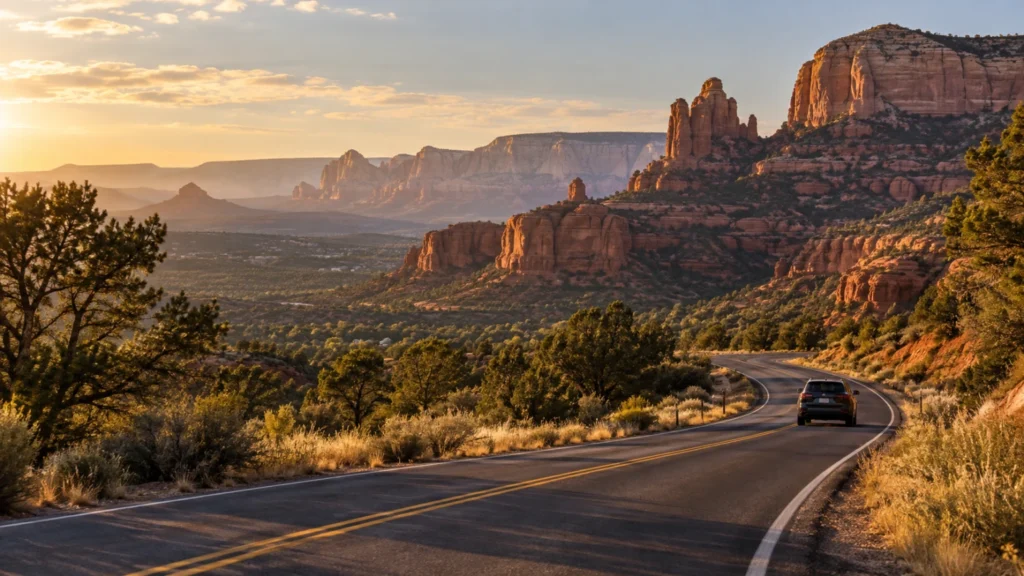
An Arizona week becomes exhausting when every red-rock name on the map turns into an overnight stop. A focused 7-day Arizona road trip uses Phoenix as the air gateway, gives Sedona two full days, and stays at the Grand Canyon South Rim long enough to see more than one overlook.
This is a seven-calendar-day, six-night loop. The default split is one Phoenix-area arrival night, three Sedona nights, and two South Rim nights. A late arrival or early departure may justify a second Phoenix-area night; take it from Sedona or the canyon rather than adding a seventh night that does not exist.
Quick Answer
- Route: Phoenix → Sedona → Grand Canyon South Rim → Phoenix.
- Trip definition: seven calendar days, six nights.
- Car needed: yes; check rental terms and road conditions.
- Best rim: South Rim for this Phoenix loop because it is open year-round and fits the route.
- Biggest trade-off: Phoenix sightseeing versus more time in Sedona or at the canyon.
- What not to add: Page, Monument Valley, Zion, or the North Rim.
7-day Arizona road trip at a glance
| Day | Plan | Sleep |
|---|---|---|
| 1 | Arrive Phoenix; collect car and recover | Phoenix area |
| 2 | Drive to Sedona; easy trail or viewpoint | Sedona |
| 3 | Full Sedona day | Sedona |
| 4 | Second Sedona day or Flagstaff side trip | Sedona |
| 5 | Drive to South Rim; first overlooks and sunset | South Rim/Tusayan |
| 6 | Full Grand Canyon day | South Rim/Tusayan |
| 7 | Drive to Phoenix and depart | — |
Day 1: Arrive in Phoenix and protect the drive
Collect the rental car, check fuel and tire condition, and stay near the airport or on the north side of the metro area. Driving to Sedona can work after an early arrival, but it should not be the default after a long flight, darkness, or unfamiliar vehicle pickup.
Phoenix deserves time on a longer Arizona trip. In this one, its main job is to make the loop safe. If the flight lands early and the weather is comfortable, add one short city activity rather than a remote desert hike.
Day 2: Phoenix to Sedona
Leave after breakfast and treat the drive as a transition, not a race. Map estimates do not include airport traffic, fuel, food, construction, or scenic stops. Check Arizona 511 before departure.
After check-in, choose a short trail or viewpoint suited to the temperature, remaining daylight, and parking conditions. Do not make the first Sedona afternoon the trip’s hardest hike. Trailhead access and parking rules can change, so use current local and land-manager guidance.
Days 3–4: Two full days in Sedona
Two full days let you choose activities by conditions instead of forcing a fixed list. Put the longer hike on the cooler or clearer morning. Use the other day for a shorter trail, scenic drive, town time, or a guided activity.
Carry more water than a city walk would require, protect against sun, and turn around before heat or storms erase the safety margin. Sedona sits above Phoenix but can still be hot. In winter, shaded trails can hold ice even when lower desert roads are dry.
Flagstaff belongs as an optional side trip, not another hotel base. Use it when weather, altitude, food, or a specific attraction makes the drive worthwhile. Otherwise, the third Sedona night prevents another pack-and-check-in cycle.
Day 5: Sedona to the Grand Canyon South Rim
Drive north with enough time to arrive before the first planned viewpoint. The South Rim averages about 7,000 feet in elevation according to the National Park Service, and weather can differ sharply from Sedona and Phoenix.
Stay inside the park or in Tusayan when availability and budget fit. Reservations are strongly recommended in busy periods. After check-in, use the remaining daylight for the Rim Trail or a shuttle-accessible overlook. Do not pair a late drive with a strenuous descent below the rim.
Day 6: A full South Rim day
The South Rim is open year-round, but access inside the park changes by season. For fall 2026, the NPS shuttle schedule lists the Village, Kaibab Rim, Hikers’ Express, and Hermits Rest routes. Hermit Road is closed to private vehicles from March 1 through November 30, so the shuttle, walking, cycling, or a permitted commercial tour is the practical access.
A strong first visit combines part of the Rim Trail, geology context at Yavapai, and viewpoints reached by the active shuttle routes. Desert View Drive can be a separate scenic option when road status and daylight allow.
Do not casually turn a rim itinerary into an inner-canyon hike. Elevation change, heat, limited water, and the climb back make a descent far harder than the first downhill miles suggest. Check NPS critical updates, trail closures, water status, and heat guidance before any below-rim plan. Overnight travel below the rim requires the appropriate backcountry permit.
Day 7: Return to Phoenix
The South Rim to Phoenix is a substantial final drive. Do not attach it to an early flight. A late departure can work with a wide buffer; otherwise, move the second South Rim night to Phoenix on Day 6 or add a trip day.
Check park roads, Arizona 511, rental-car return requirements, and airport timing before leaving. Winter storms can create temporary closures and snow-covered roads near the rim even when Phoenix is warm.
Season, weather, and daylight decisions
| Season | Main issue | Planning response |
|---|---|---|
| Summer | Phoenix heat, exposed trails, monsoon lightning | Start early, reduce strenuous midday activity, follow current warnings. |
| Early fall | Heat may persist; storms and crowds remain possible | Keep flexible hike days and check shuttle status. |
| Late fall and winter | Snow and ice at higher elevations | Carry appropriate gear and monitor road closures. |
| Spring | Variable rim weather and busy periods | Reserve lodging and verify trail conditions. |
Sunset time is not the end of the planning problem. Build in the walk from the overlook, shuttle queue, parking return, and drive to lodging. Never plan an unfamiliar scenic road around a last sliver of daylight.
Check sunrise and sunset against the exact travel date, not a monthly average.
Rental car and packing decisions
- Confirm mileage, additional-driver, fuel, and roadside-assistance terms.
- Do not assume an electric rental will fit the route without checking charging locations and cold-weather range.
- Keep water, food, layers, sun protection, a flashlight, and a basic emergency kit in the car.
- Download maps because mobile coverage can be inconsistent.
- Never leave valuables visible at a trailhead.
- Use one main bag and a small day pack to reduce daily repacking.
The USA road trip planning guide covers drive limits, vehicle preparation, and backup time. Pair it with the trip planning checklist before reserving lodging and the car.
What not to add
Page and Antelope Canyon are appealing, but they create another long leg, another base, and a timed-tour dependency. Monument Valley and Zion stretch the loop farther. The North Rim has seasonal access and does not belong as a casual substitute for the South Rim on this route.
If you want a broader western drive, start with a longer itinerary. The existing California itinerary shows another focused one-week model, while the Florida itinerary offers a flatter, less altitude-sensitive alternative.
Related Reading
- USA Road Trip Itinerary Planning
- 7-Day California Itinerary
- 7-Day Florida Itinerary
- Trip Planning Checklist
- One-Way vs Round-Trip Flights
FAQ
Is seven days enough for Phoenix, Sedona, and the Grand Canyon?
Yes, when Phoenix is mainly the gateway and the trip stays focused on Sedona and the South Rim.
Should I stay in Flagstaff?
Not by default. Visit from Sedona or use Flagstaff as a substitute base when weather, lodging, or a specific activity favors it.
Do I need a Grand Canyon reservation?
You need an entrance pass, and lodging or camping should be reserved early in busy periods. Check current NPS rules for any activity that requires a permit.
Can I drive Hermit Road?
Private vehicles are generally excluded from March 1 through November 30. Use the current NPS shuttle information and accessibility rules.
Can I add Page?
Only by taking meaningful time from Sedona or the South Rim. For this seven-day route, leave it out.
Conclusion
The best 7-day Arizona road trip is smaller than many search results suggest. Three Sedona nights and two South Rim nights create time for weather changes, safer trail choices, and a full canyon day. Keep Phoenix as the gateway, monitor official conditions, and resist the detours that turn every day into a drive.
Last updated: September 2026. Road conditions, park access, shuttle operations, weather, reservations, and travel requirements can change. Verify current details before booking.